|
|
|
Invited SpeakersConfirmed Invited Speakers:Quentin Boehler
Quentin Boehler is an Assistant Professor (Tenure Track) of Robotics at ETH Zurich in the Institute of Robotics and Intelligent Systems, where he leads the Medical Robotics Lab. He received an engineering degree in mechatronics from INSA Strasbourg (2013), followed by an M.Sc. (2013) and a Ph.D. (2016) in robotics from the University of Strasbourg. His doctoral research focused on tensegrity mechanisms and variable-stiffness devices for MR‑compatible robotic systems. From 2017 to 2025, he was a postdoctoral associate and later a senior researcher at the Multi‑Scale Robotics Lab at ETH Zurich, where he worked on magnetically guided devices and the development of electromagnetic navigation technologies for medical applications. His current research addresses unmet clinical needs in minimally invasive robotic procedures, with an emphasis on the design, control, and simulation of continuum robots for therapeutic and diagnostic interventions. He has co-authored more than 50 scientific publications in leading journals such as Science, Science Robotics, Advanced Science, and Nature Communications. He is also actively engaged in the IEEE Robotics and Automation Society and currently serves as an Associate Editor for IEEE Robotics and Automation Letters. Cathrine Frandsen
Cathrine Frandsen received the Ph.D. degree in Physics in 2004 from the Technical University of Denmark (DTU), Kgs. Lyngby, Denmark, for her thesis "An experimental study of magnetic nanoparticles and their interactions" supervised by Professor Steen Mørup. Afterwards, she was Assistant Professor in Materials Physics, first at the Danish School of Art Conservation (2004-2005), and then at DTU. In 2007 and 2009, she had two postdoctoral research stays at UC Berkeley, USA, in the group of Professor Jill F. Banfield. In 2009, she was tenured at DTU Physics, and since 2015 she has been full Professor at DTU Physics, where she heads a research activity on magnetic materials incl. a laboratory for synthesis and magnetic measurements by ac- and dc-magnetometry, ac-calorimetry, and Mössbauer spectroscopy. Her research focuses on the properties of magnetic nanoparticles and how these can be modulated, e.g. by inter-particle interactions, specifically to design new materials for greener/smarter technology. Her recent work relates to magnetic nanoparticle materials for induction-heated catalysis, magnetic hyperthermia, and printable microelectronics. She is the author of >100 scientific papers and 2 patent applications. Sofia Kantorovich
Sofia Kantorovich received her Master’s Diploma in Applied Mathematics from Ural State University, Ekaterinburg, Russia, in 2003, and her PhD in the Physics of Magnetism from Ural State University and Lomonosov Moscow State University in 2004. Her doctoral research focused on theoretical approaches to many-body systems of self-assembling magnetic nanoparticles. From 2004 to 2007, she worked as a postdoctoral researcher at the Max Planck Institute for Polymer Research in Mainz, Germany, where she was engaged in the fields of statistical physics and computer simulations of soft matter systems, including polymers and colloids. She then continued her research at the University of Stuttgart, first as a postdoc and later as a senior Humboldt Fellow at the Institute for Computational Physics. Her work there centred on developing coarse-grained models and simulation methods for magnetic colloidal systems and ferrofluids, contributing to a deeper understanding of dipolar interactions, self-assembly, and structural transitions. In 2012, she moved to the University of Rome “La Sapienza”, where, in addition to studying dipolar systems, she worked on computational and theoretical models of DNA self-assembling duplexes. In 2013, Dr Kantorovich was appointed Associate Professor at the University of Vienna, where she leads a research group in Computational Dipolar Soft Matter Physics. Her research focuses on magneto-responsive materials, such as magnetic elastomers and ferrogels—composite systems comprising magnetic particles embedded in elastic matrices. These materials exhibit tunable mechanical properties under external magnetic fields and hold promise for applications in soft robotics, sensing, and biomedical engineering. Her approach combines theoretical modelling, continuum mechanics, and advanced simulations to understand how microscopic interactions influence macroscopic material behaviour. In this context, she has introduced novel concepts to describe anisotropy, plasticity, and magneto-mechanical coupling in soft magnetic systems. Her current research seeks to integrate multi-scale simulations, statistical mechanics and machine learning for the in silico design of adaptive magnetic soft materials with programmable functionality. Lise-Marie Lacroix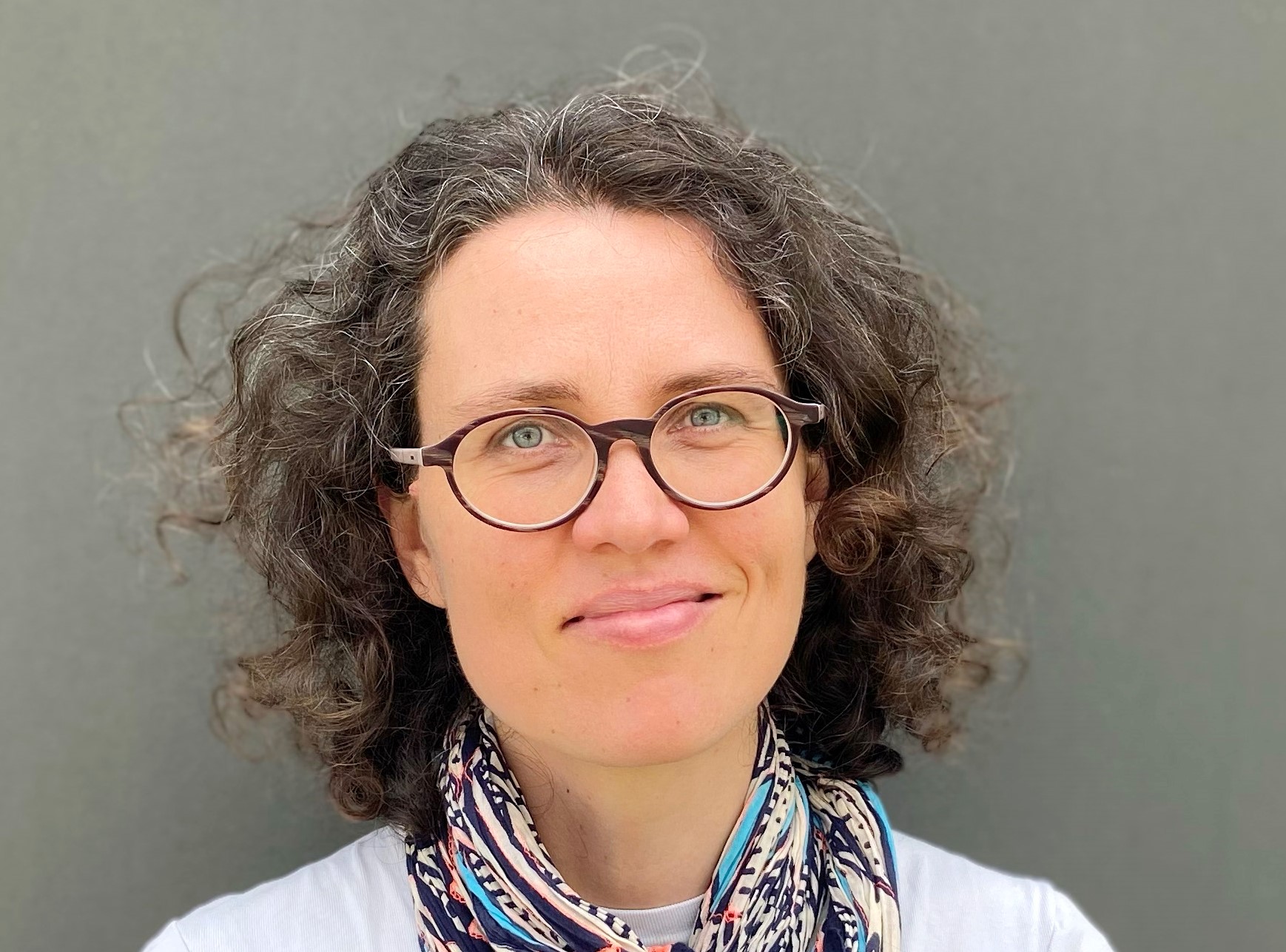
Lise-Marie Lacroix is full professor of physics at Toulouse University and she is heading the “Nanostructures and Organometallic Chemistry” group. She has been nominated as junior member of the Insitut Universitaire de France (2022-2026). She received a dual physics and engineering degree from INSA Toulouse in 2005 after spending 1 year in Japan (Canon Research Center). She obtained her PhD in Nanophysics in 2008 from INSA on the synthesis of iron nanoparticles for magnetic hyperthermia, under the supervision of B. Chaudret, S. Lachaize and J. Carrey. Her doctoral work was awarded the thesis prize by the Physical Chemistry Division of the French Society of Chemistry. She joined then Pr. Shouheng Sun group in Brown University (USA) for a postdoctoral research on the synthesis of Fe-based nanoparticles for biomedical applications. In 2009, she returned as assistant professor in the Laboratory of Physics and Chemistry of Nano-Objects and became full professor in 2024. At the crossroad between chemistry and physics, she works on the rational design of optimized nanoparticles coupling magnetic and catalytic properties for magnetically-induced catalysis.She has served as Principal Investigator for several projects on the development new magnetic materials by directed assemblies of nanoparticles. Modesto T. López-López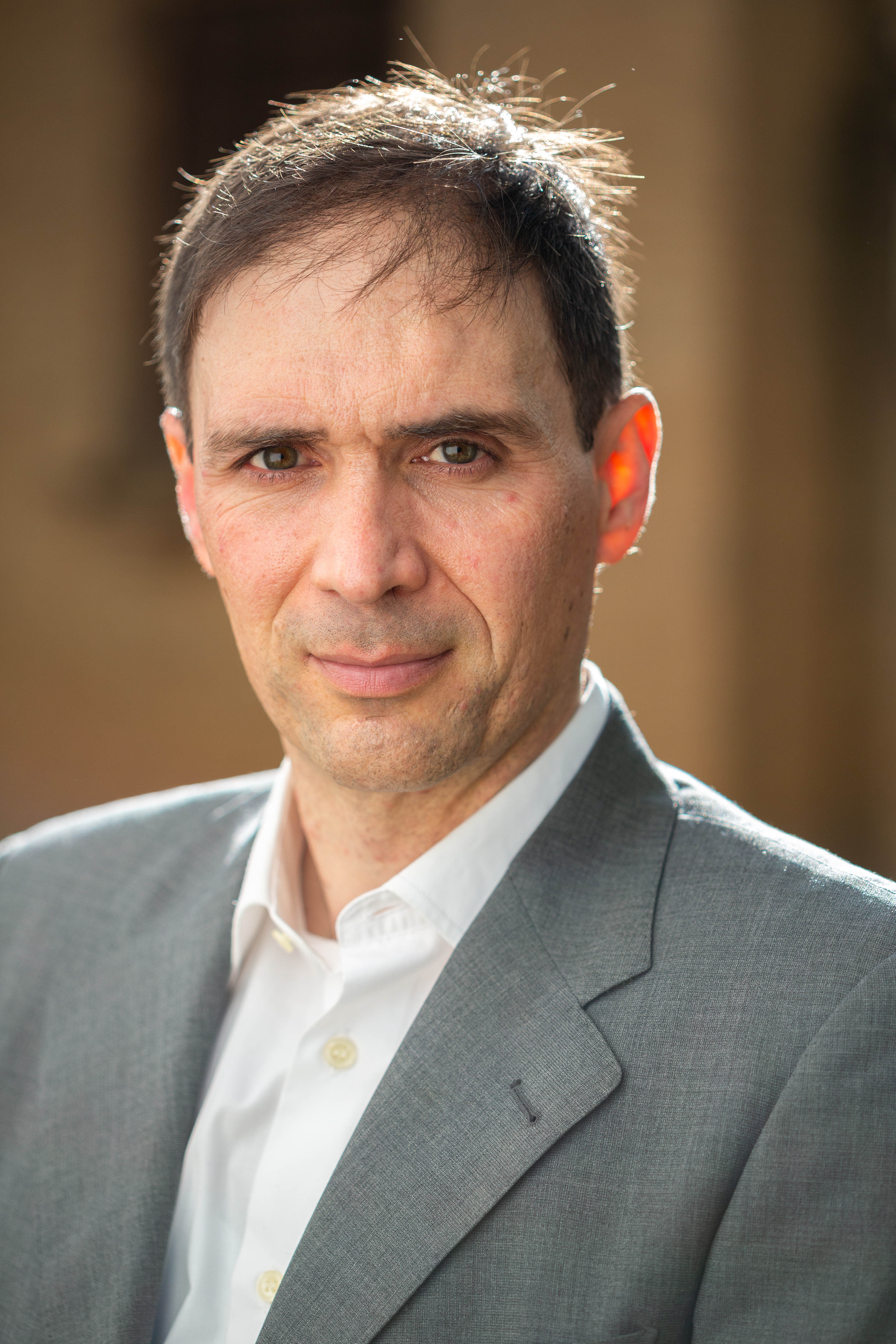
Dr. Modesto T. Lopez-Lopez is a Full Professor at the University of Granada, Spain, where his research focuses on the design and actuation of magnetic-responsive smart polymer hydrogels. He specializes in achieving complex, programmable movements—such as twisting, bending, and high reversible elongation—through the precise integration of magnetic particles within the polymer network. For his work on highly deformable magnetic actuators, he received the Andrew Keller Award (Best European Paper in POLYMER 2021). He has served as Principal Investigator for several projects on the development of polymeric hydrogels for advanced applications in soft robotics and tissue engineering. With over 120 JCR publications and 6 patents, he chaired the Organizing Committee of the 16th International Conference on Magnetic Fluids (ICMF 2023) and has been a member of its International Steering Committee since 2019. He is currently a member of the University of Granada’s Excellence Unit "Modeling Nature" and the Biosanitary Institute of Granada. Olivier Sandre© Cyril Frésillon, CNRS Photothèque
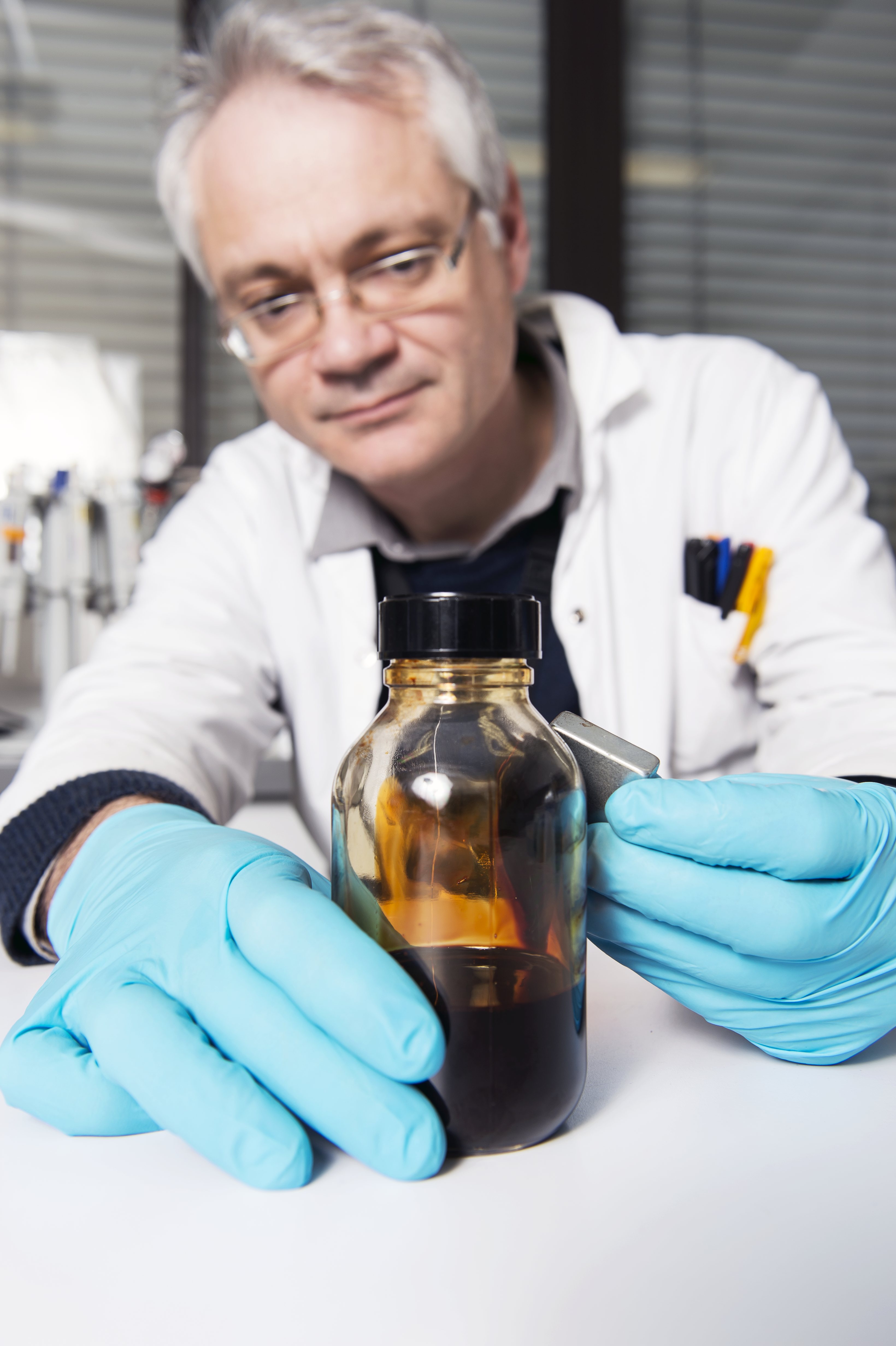
Dr Olivier Sandre has been a tenured CNRS researcher since 2001, and senior researcher since 2014 (1st class since 2023). After initial research on ferrofluids in 1996 with Pr Jean-Claude Bacri, Pr Régine Perzynski and in collaboration with their inventors, Dr Ron E. Rosensweig (for physics) and René Massart (for chemistry), he pursued his PhD thesis in 2000 on the dynamics of pores in giant lipid vesicles, supervised by Pr Françoise Brochard-Wyart at the Curie Institute in Paris. Then he did a 1-year post-doc at the Chemical Engineering Department of UC Santa Barbara with Pr David J. Pine and Pr Deborah K. Fygenson, where he studied physical properties of recombinant protein nanotubes. In 2001, he came back to Pierre & Marie Curie University in Paris as a junior CNRS researcher in Pr Valérie Cabuil’s lab, to work on polymeric systems doped with magnetic iron oxide nanoparticles (IONPs). He joined the Laboratory of Organic Polymer Chemistry at the University of Bordeaux and Bordeaux INP in 2010, after collaborating with Pr Sébastien Lecommandoux since 2003 on the design and study of magnetic polymersomes for theranostic applications (MRI combined with anti-cancer therapy). He published 111+ articles on the design and structure–properties of various nanoscale self-assemblies, based on different bricks including polymers, lipids, inorganic nanoparticles (IONPs, Au NPs...), optical probes, MRI contrast agents (either IONPs or Mn complexes), and more recently model polymer particles to study micro/nanoplastic pollution and their size effect on biodegradation. From 2019 to the end of 2023, he served as Chair of the Scientific Council of the CNRS Institute of Chemistry and is currently Secretary General of the French polymer group (GFP) until the end of 2026. |